

ULTRASONIC TESTING (UT)
Advanced internal flaw detection using high-frequency sound waves.
Ultrasonic Testing (UT) is a highly reliable non-destructive testing method that utilizes high-frequency sound waves to look deep inside materials. By transmitting ultrasonic waves into a component, our certified technicians can detect subsurface flaws, internal cracks, voids, and manufacturing defects that are completely invisible to the naked eye. UT provides precise depth and sizing information for flaws, making it an indispensable tool for verifying asset integrity without causing any damage.
Key Applications:
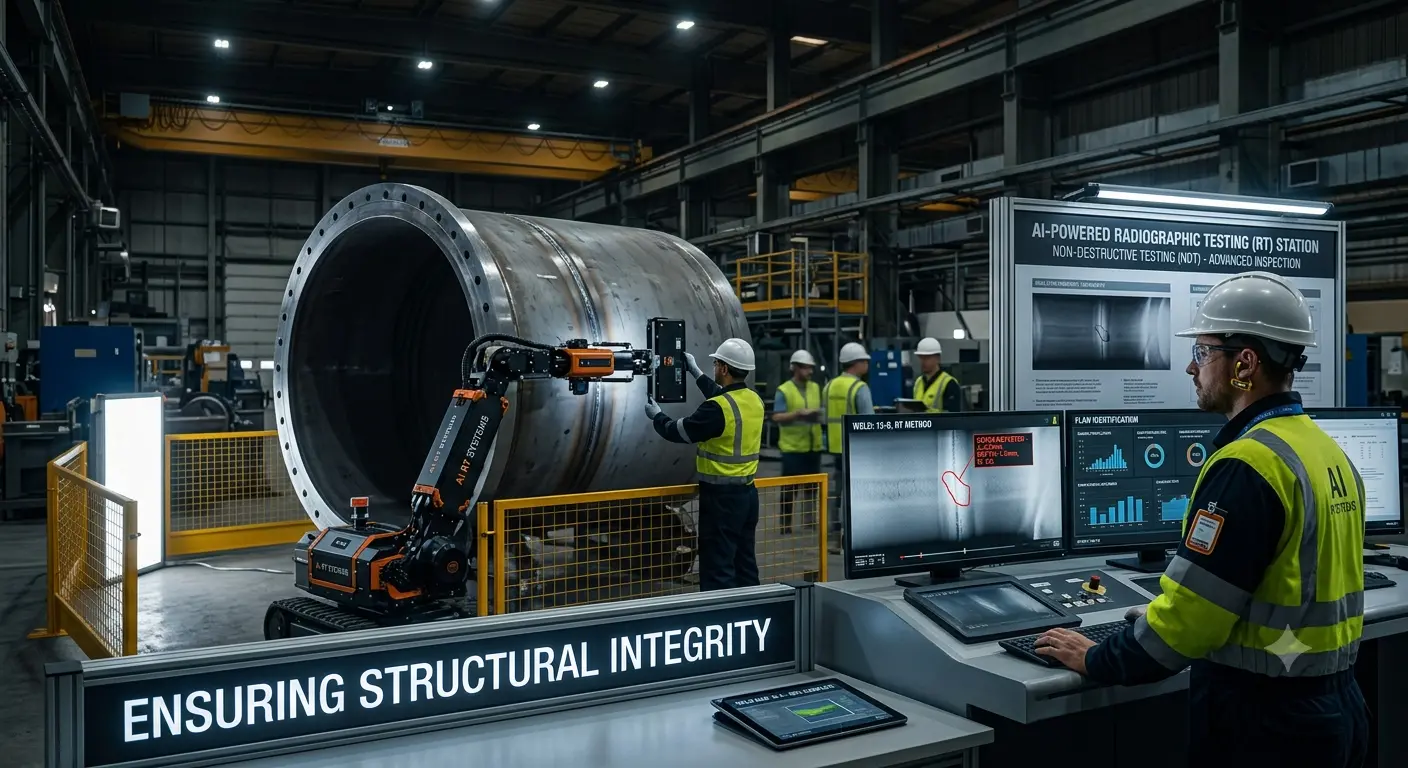
RADIOGRAPHIC TESTING (RT)
Volumetric inspection via X-Ray and Gamma-Ray imaging.
Radiographic Testing (RT) uses short-wavelength electromagnetic radiation (either X-rays or Gamma rays) to penetrate industrial components and capture their internal structure on digital media or radiographic film. As the radiation passes through the material, different densities and defects absorb different amounts of energy, creating a detailed shadow graph. This method provides a permanent visual record of internal discontinuities like porosity, slag inclusions, and internal cracks, ensuring absolute clarity regarding weld quality.
Key Applications:

MAGNETIC PARTICLE TESTING (MPT)
High-precision surface and near-surface crack detection.
Magnetic Particle Testing (MPT) is a fast and highly sensitive NDT method dedicated to discovering surface and shallow subsurface discontinuities in ferromagnetic materials (metals that can be magnetized). By applying a magnetic field to the component and introducing fine iron particles (either dry or suspended in a liquid), any structural flaw will create a magnetic "leakage field" that attracts the particles. This highlights the exact location, length, and shape of structural stress cracks or fatigue flaws immediately.
Key Applications:
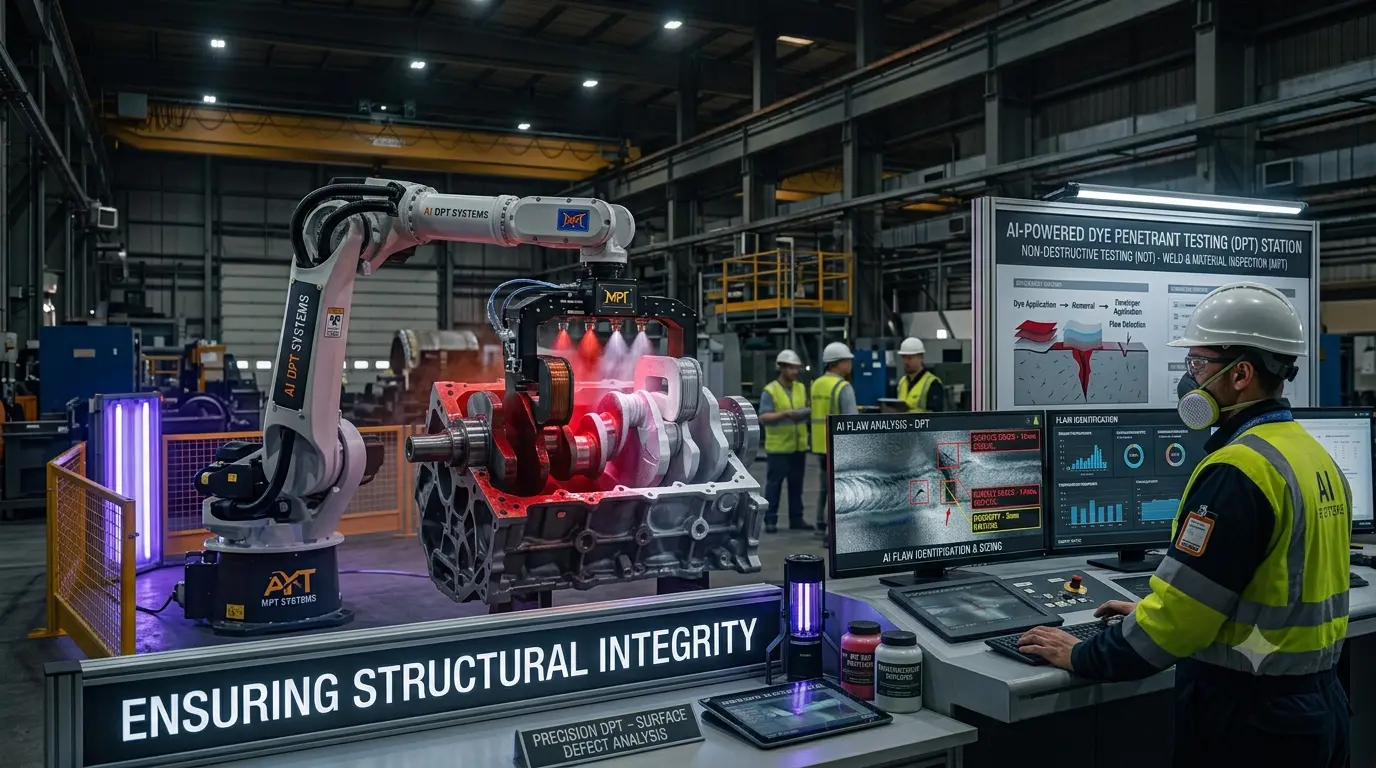
DYE PENETRANT TESTING (DPT)
Rapid, cost-effective detection for all surface-breaking defects.
Dye Penetrant Testing (DPT), also known as Liquid Penetrant Testing (PT), is a universally trusted method for locating surface-breaking defects in virtually any non-porous material, including non-ferrous metals, plastics, and ceramics. The process involves applying a highly visible colored or fluorescent liquid dye to the component’s surface. After allowing the liquid to seep into any microscopic cracks via capillary action, excess dye is cleaned, and a developer is applied. The developer draws out the trapped dye, creating a stark, high-contrast visual indicator of the surface flaw.
Key Applications:

VISUAL INSPECTION (VT)
The fundamental baseline for quality assurance and regulatory compliance.
Visual Testing (VT) is the oldest and most fundamental component of any rigorous quality assurance program. Our highly trained and certified visual inspectors systematically evaluate materials, welds, and structures using specialized equipment—including weld gauges, boroscopes, magnifying lenses, and remote mirrors. VT ensures that fabrication meets precise drawing dimensions, surface alignment specifications, and stringent international construction codes, preventing simple structural errors before they turn into major field failures.
Key Applications:
THICKNESS & CORROSION MEASUREMENT
Proactive wall thickness tracking and predictive asset management.
Industrial assets operating under extreme pressures or chemical environments are constantly vulnerable to erosion and corrosion. Our Thickness and Corrosion Measurement service utilizes highly calibrated digital Ultrasonic Thickness Gauges (UTG) to measure the remaining wall thickness of assets from the outside, without requiring shutdown. By tracking material degradation over time, we help plant managers calculate remaining asset lifespans, forecast necessary repair windows, and prevent catastrophic environmental leaks or operational failures.
Key Applications: